How Do Plumbers Detect Leaks Behind Orange County Walls and Slabs?
We start at the water meter, not the drywall. Every fixture in the house gets shut off. Then we watch that little leak dial on the meter. If it creeps even a bit, water is moving somewhere in the system. From there, acoustic listening gear and a pressure test tell us which line is losing it.
A pinhole in a pressurized copper line makes a steady hiss, almost like a tiny whistle. A ground microphone picks that sound up right through tile and concrete. A lot of older Orange County homes still run soft copper. Nine times out of ten those lines give out at a bend or a fitting. That's rarely in the middle of a straight run.
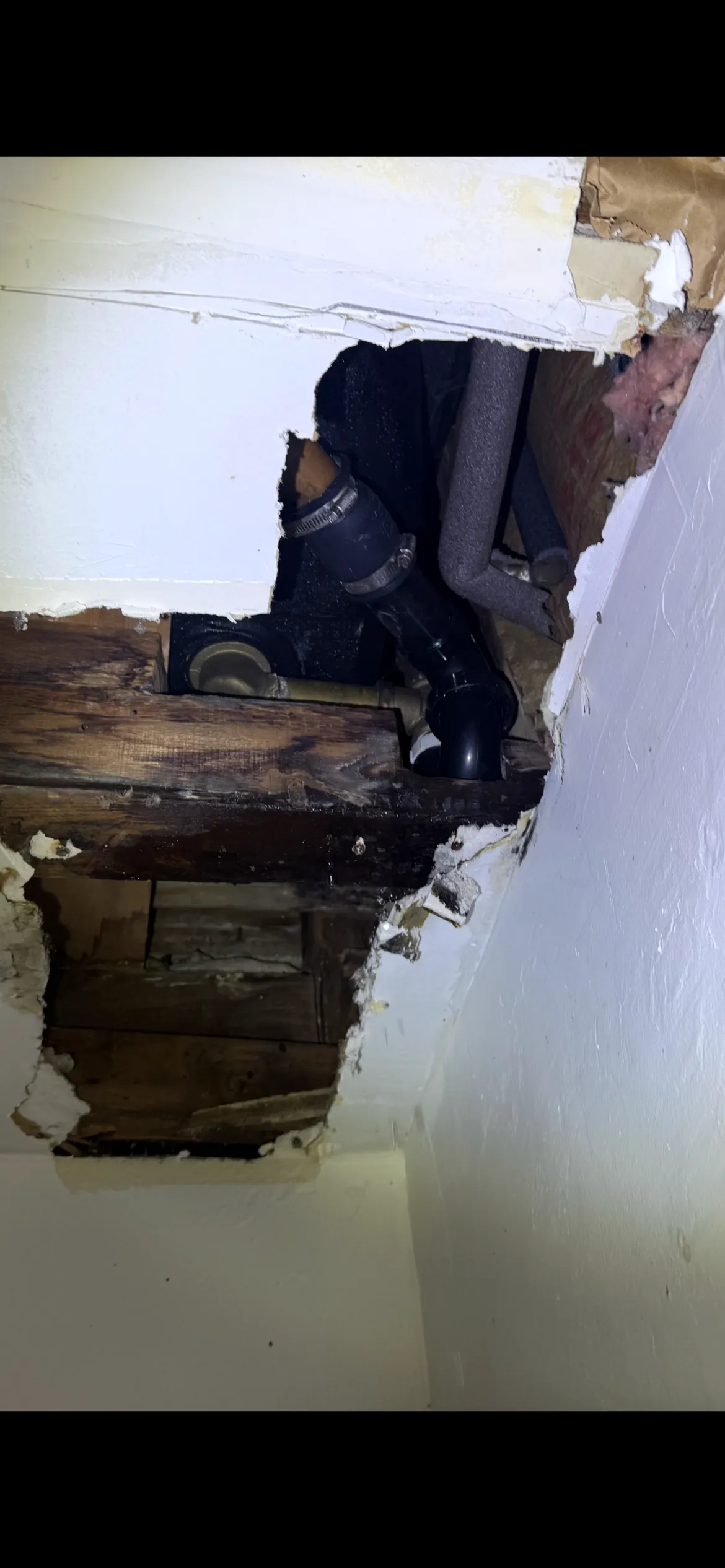
Once the cover is off, the pipe wall is almost always thinner than it looked from outside. We mark the spot and open the smallest patch the repair allows. Most of the time that patch ends up under a foot square. Less mess for you, faster fix for us.
What Tools Do Plumbers Use to Find a Hidden Pipe Leak?
We lean on four main tools. Acoustic listening equipment hears water escaping a pressurized line. A thermal imaging camera shows the cool or warm shadow a leak leaves behind on a floor or wall. Tracer gas finds the really tiny leaks that nothing else can hear. Pressure gauges prove the fixed line is actually holding once we're done.
Thermal cameras get oversold a bit, in my opinion. They see temperature, not water. On a hot water line under tile, the image practically jumps out at you. On a cold line sitting in a cold crawl space, though, it shows almost nothing useful. That's when we switch over to gas.
Tracer gas is our last resort, and honestly our best one. We push a safe helium and nitrogen blend into the drained line. The gas rises up through the slab, and a sniffer probe finds it right at the surface. It catches hairline cracks that make no sound at all. That's the kind that would slip past every other tool we own.
What About Camera Inspection?
A drain camera is for waste lines, not supply lines. We feed it through a cleanout to look for cracks, root intrusion or a belly in the pipe. On clay sewer laterals from the 1950s, roots at the joints are the usual culprit.
What Are the Signs of a Hidden Leak in an Orange County Home?
Watch for a water bill that keeps climbing with no change in your habits. Also listen for running water when every single tap in the house is off. Other signs: a warm patch on the floor, musty smells, stained ceilings, and low pressure at just one fixture. Any one of these is worth a phone call.
Smell matters more than people think. A damp cabinet under a sink starts smelling off weeks before the wood ever swells or warps. The federal guidance on mold and dampness in the home comes from the CDC. It's clear that fixing the water source always comes first, before anything else.
In basements built into our local clay soil, things get tricky. A slow supply leak and plain groundwater can look exactly the same on the floor. We test the water for chlorine to tell them apart. Treated water usually means a pipe. No chlorine usually means it came from outside the house.
How Long Does Leak Detection Take in Orange County?
Most pinpoint jobs take one to three hours. A meter check with pressure isolation runs about thirty minutes on its own. Acoustic work on a slab adds an hour or more. It depends on the flooring and how much background noise we're fighting. Sewer camera runs tend to go quicker. Tracer gas takes the longest, since the line has to be drained first.
Cold weather changes the timing quite a bit. Freeze and thaw cycles across the Hudson Valley split pipes open in unheated crawl spaces. The National Oceanic and Atmospheric Administration tracks those seasonal temperature swings. After a hard freeze, we often find two breaks on the same line, not just one.
Noise is our enemy, plain and simple. We work best in a quiet house with the dishwasher and furnace switched off. Takes about two minutes to shut those down. That alone can cut the search time in half.
What Affects the Cost of Finding a Leak?
Cost moves with access, depth, and which method we have to use. A leak under an open basement ceiling is cheaper to find than one buried under a finished slab. Tracer gas costs more than listening gear, since it uses consumable gas and more labor hours. Sewer lines add camera time on top. Repair always gets priced separately from detection, so there's no confusion later.
Flooring matters more than most homeowners expect going in. Acoustic gear reads bare concrete pretty well. Thick carpet, pad, and hardwood all muffle the sound a lot. On those floors we lean on thermal and gas instead, which just takes longer to run.
Here's the judgment call we end up making a lot. If the leak sits on a run of old, thin-wall copper, we'd rather reroute it. That whole section beats patching it twice. A patch on a corroded line rarely holds past the next season. It's just buying a little time before you call us again.
The Bottom Line
Finding a leak is a process, not a hunch. Confirm it at the meter. Isolate the system. Then pinpoint it with the right tool for that pipe and that floor. Done in that order, the repair stays small and the walls stay mostly intact. If you are seeing stains, hearing water or watching the bill climb, our plumbing leak detection work in Orange County covers the whole search. Call (845) 674-3616 and describe what you noticed first.